Last updated:
Typical UK tiling costs (per sqm, indicative)
Per-sqm rates separate labour (fitting) from materials (tiles, adhesive, grout). Both move depending on the tile and the room, so the realistic way to compare quotes is by total project cost — but the table below gives a starting frame for what you should be paying.
Standard ceramic, straight lay Simple bathroom or splashback work, square edges, basic grout. | £30 – £45/sqm |
Porcelain, straight lay Most common bathroom + kitchen tile; harder to cut than ceramic. | £40 – £60/sqm |
Large-format (600×1200mm+) porcelain or slab Needs back-buttering, S1/S2 adhesive, rail-cutter and two-person handling. Far higher skill requirement. | £60 – £100/sqm |
Natural stone (marble, travertine, limestone) Plus sealing and edge work; slower to cut and grout. | £55 – £85/sqm |
Mosaic / zellige / herringbone lay Pattern lays take 1.5–2× a straight lay. Mosaics charged by area but very labour-intensive. | £60 – £110/sqm |
Typical tiling project costs
Most homeowners want a project number rather than a per-sqm figure. Below are typical 2026 UK ranges for common projects, including labour and standard adhesive/grout (tiles supplied separately unless noted).
Bathroom — walls + floor, standard porcelain Typical 4–5 day fitting programme for a 6–8 sqm bathroom. | £1,200 – £2,500 |
Bathroom — walls + floor, large-format porcelain Same room, premium tile + lay pattern + more cutting waste. | £1,800 – £3,800 |
Kitchen splashback (single wall) Depends on tile size and pattern. | £250 – £700 |
Wet-room floor + walls with tanking Includes proper falls, tanking membrane and silicone-finished corners. | £2,500 – £5,500 |
Hallway / living-room floor (~20 sqm) Adds self-levelling compound prep if subfloor is out of spec. | £900 – £2,000 |
What affects the per-sqm rate
Two tilers with the same hourly rate can quote very differently on the same room. The drivers are usually:
- Tile size. Bigger tiles cover more area but take longer to handle and cut. Anything above 600×600mm typically pushes the per-sqm labour up.
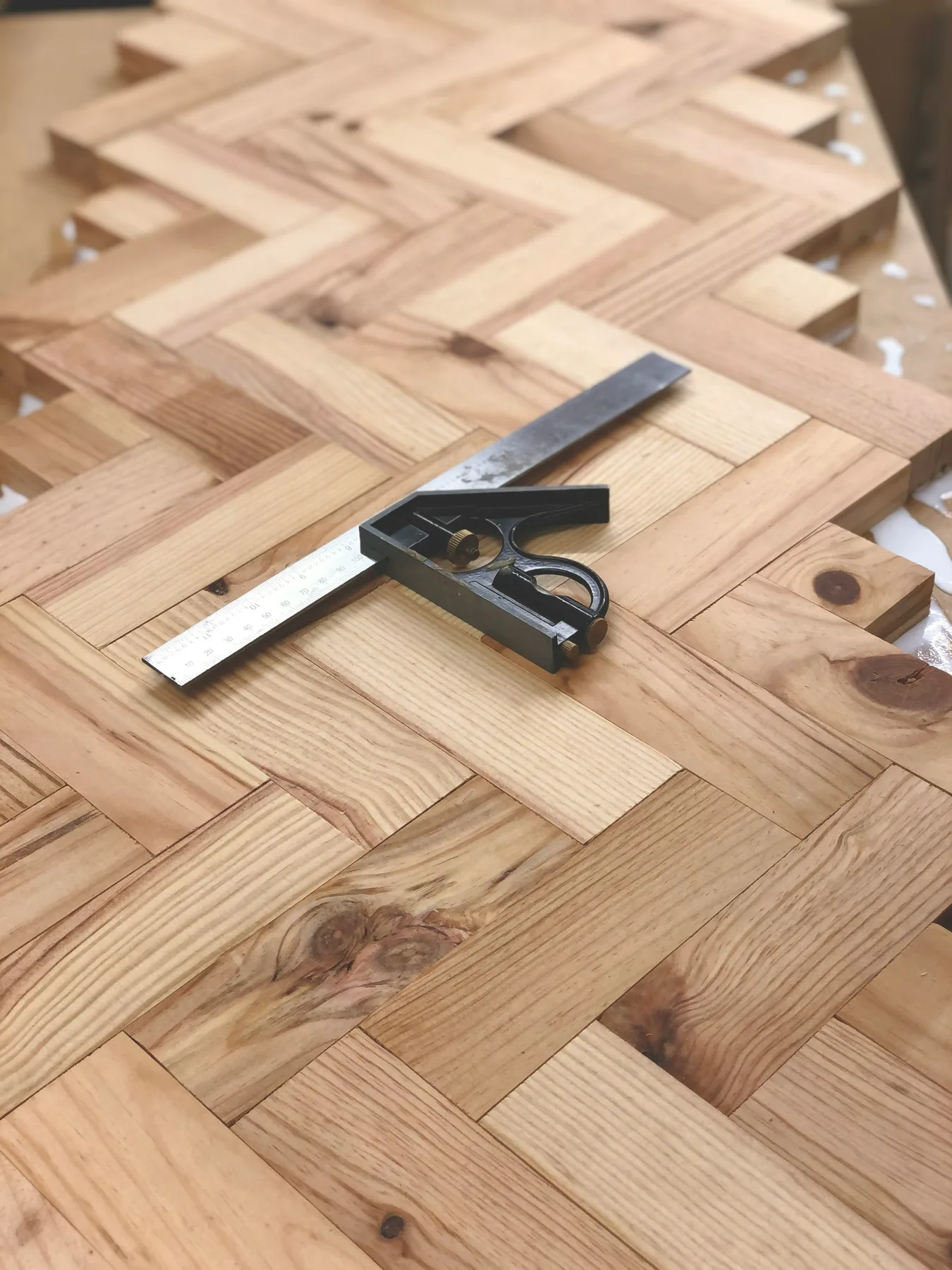
- Lay pattern. Straight lay is the baseline; brick-bond adds a little; herringbone, chevron or diagonal lay adds 30–60% to the labour because of the extra cuts and setting-out.
- Substrate prep. A flat, primed wall is quick to tile. Old plaster that needs taking back, uneven floors needing self-leveller, or hollow tiles that have to come off first all add days.
- Tile material. Natural stone is slower to cut cleanly and most need sealing before grouting. Porcelain is harder than ceramic — wet-saws are essential for clean cuts.
- Grout choice. Standard cement grout is included in most labour quotes; epoxy grout (much more durable in wet areas but harder to work with) adds material cost and labour time.
Hidden costs to ask about
Three things sometimes appear as extras after a tiling quote is accepted: waste removal of the old floor or tiles, self-levelling compound if the substrate needs it, and silicone finishing in internal corners. None of these are unreasonable to charge for — but they should be itemised at quote stage, not invoiced as surprises.
Ready for a real quote?
See our tiling service
Precision tiling for floors, walls and wet areas.